I'm writing this up because the experience is genuinely common, the mistakes they almost made are genuinely common, and the outcome is achievable for any repair operation of similar size.
The starting situation
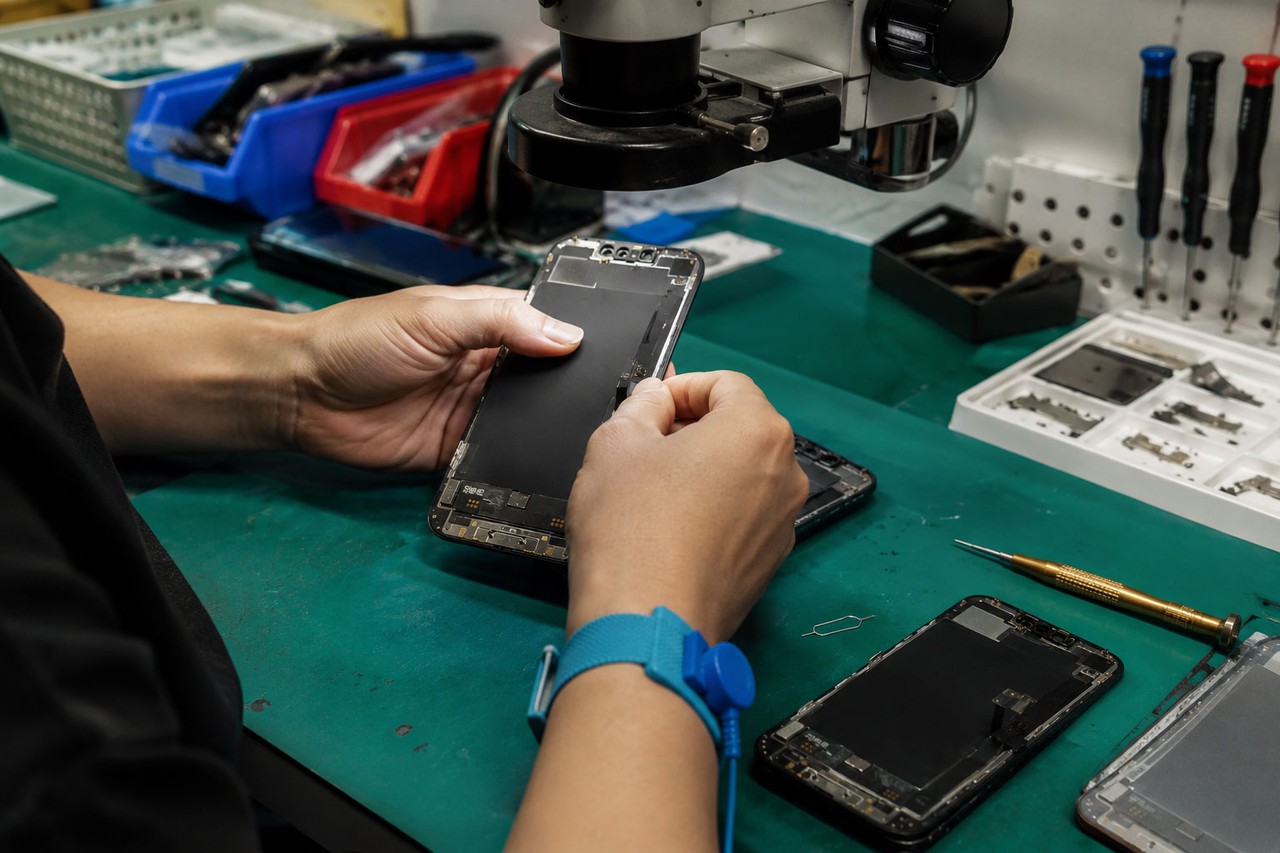
The business is a repair chain with four locations across a mid-sized UK city, doing roughly 80–100 screen replacements per week across iPhone and Samsung models. They'd been buying through a UK-based distributor for three years. The relationship was good - same-day or next-day delivery, consistent quality, responsive account management, easy returns process.
Their average cost for an iPhone 11 Incell screen from the distributor: £19.50 per unit. They were selling repairs at £69.99 and felt their margins were reasonable.
In late 2023, one of their technicians started asking questions after watching YouTube videos from US repair shops who were openly discussing direct China sourcing. The owner started running numbers and realised something they hadn't looked at closely before: their UK distributor was buying from Shenzhen suppliers - possibly including ours, since we supply several UK distributors - at a landed cost of roughly £10–12 per screen, and selling at £19.50. The distributor's margin was real and the services they provided justified some premium. But was the full premium justified?
The owner reached out to us directly after finding our contact details through a trade directory.
What they asked for, and what we advised?
Their initial inquiry was simple: can you supply the same screens we're getting from our distributor, at a lower price?
My answer was: probably yes on price, but let's first confirm you're actually getting what you think you're getting.
We asked them to send us five samples from their current distributor stock - iPhone 11 Incell, their most common repair model. We ran them through our incoming inspection process: power-on test, backlight uniformity check, five-point touch calibration, and connector flex-cycle.
Three of the five passed our full QC standard without issue. One showed backlight variance of 18% - above our 15% rejection threshold, meaning it would have been rejected in our outgoing QC. One showed a touch offset of approximately 3.5mm at the bottom-left corner - above our 2mm tolerance.
This was not evidence of a systematic problem with their distributor. A five-screen sample is not statistically meaningful. But it was consistent with what we see from suppliers who do basic power-on testing without the deeper calibration and uniformity checks. Some screens in a batch pass everything. Some don't. If you're not testing with tolerance thresholds, the variation gets distributed to your customers.
We shared these findings with the owner - not to embarrass their current supplier, but to establish a baseline conversation about what they were actually buying.
The transition decision
The owner's concern about switching to direct factory supply was the same concern I hear from most established buyers: logistics complexity, longer lead times, and what happens when something goes wrong.
These are legitimate concerns, not unfounded ones. Here's how we worked through each of them.
Logistics: They were ordering roughly 150–200 screens per month from their distributor, with top-up orders two to three times per week in small quantities. That model only works with a local distributor. Direct factory supply requires forward planning - ordering in larger batches and holding more stock on-site. We agreed on monthly consolidated shipments via DDP courier, arriving in approximately five to seven business days. This required them to hold roughly two weeks of inventory rather than three days. They initially balked at the working capital implication, and we offered sixty-day payment terms on the first two orders to ease the transition.
Quality consistency: They asked how they'd know the quality of each batch without the distributor's ongoing QC layer. We proposed the following arrangement, which we now offer to all accounts above a certain volume: each shipment includes a batch QC certificate showing the defect rate and calibration test results for that specific lot. Any batch where our outgoing defect rate exceeded 1.5% would be flagged proactively, and they'd have the option to reject that batch or accept it at a reduced price. No batch has triggered that threshold in fourteen months of the relationship.
Returns: With UK distributor supply, returning a defective screen cost them nothing logistically - drop it in a return bag, credit within a few days. With direct supply, returning screens to Shenzhen is expensive and slow. We agreed on a credit-on-next-order system for defective units up to 3% of the batch quantity, with photo evidence required. Above 3% of a batch, we cover the return shipping and replace the full batch. In practice, the credit system has been used twice in fourteen months - both times resolved within 48 hours of the photo submission.
The numbers after three months
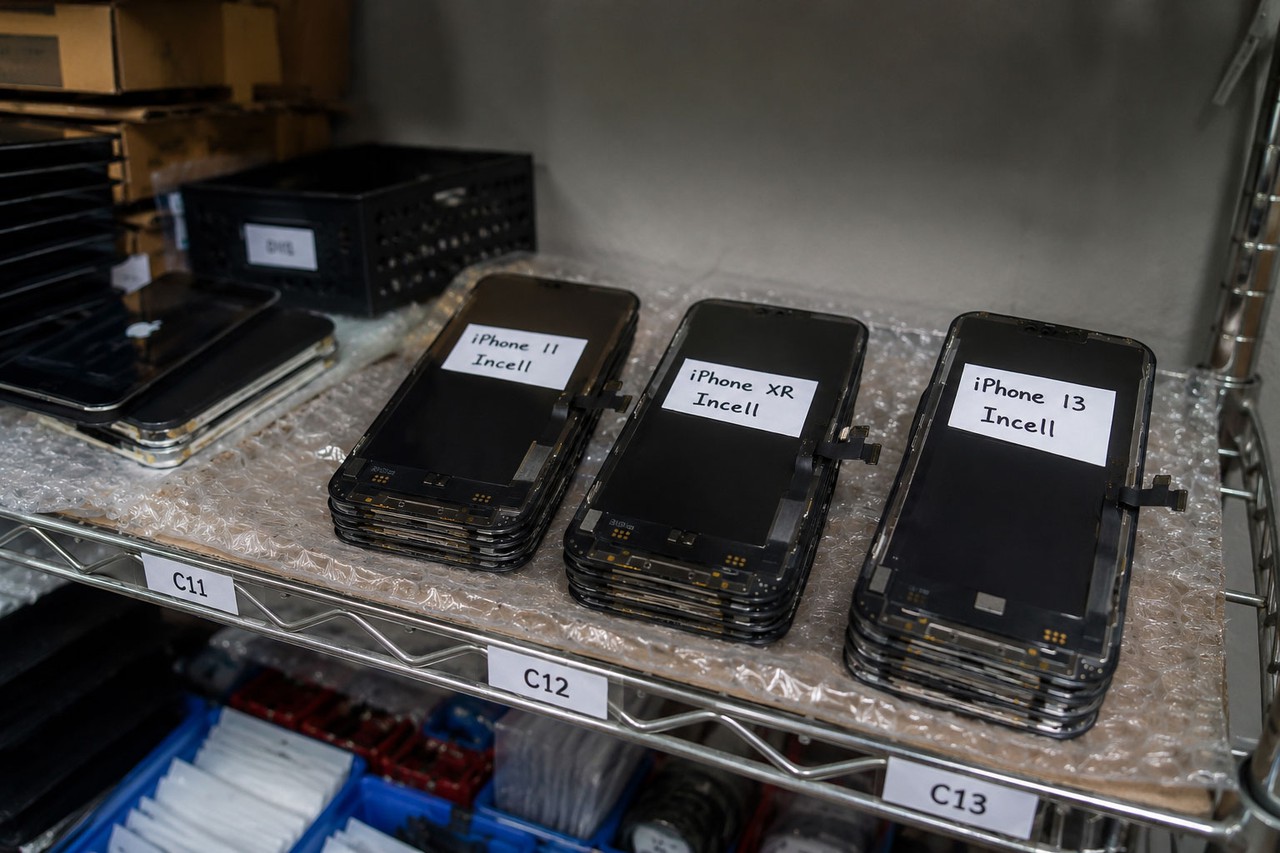
Their first two monthly orders were iPhone 11 and iPhone XR Incell screens, representing about 65% of their total screen volume. The remaining 35% - premium OEM Refurb for their "original parts" service tier, and older models with low turnover - they continued sourcing through the UK distributor, because the economics of direct sourcing don't justify the logistics complexity for slow-moving SKUs.
iPhone 11 Incell cost, direct from us (DDP, 150-unit monthly): £13.20 per unit landed Previous UK distributor cost: £19.50 per unit Saving per unit: £6.30 Monthly saving on this model alone: £945
iPhone XR Incell cost, direct from us (DDP, 100-unit monthly): £11.80 per unit landed Previous UK distributor cost: £17.50 per unit Saving per unit: £5.70 Monthly saving: £570
Total monthly saving across the two models: approximately £1,515, or about 22% of their previous parts spend on those models.
They did not reduce their retail repair prices. Their £69.99 iPhone 11 repair price remained unchanged. The saving went entirely to margin improvement.
Over three months, the additional gross profit on these two models alone covered the working capital cost of holding two weeks of additional inventory - which was the main financial concern at the start of the transition.
What almost went wrong?
In month two, they placed their monthly order and asked us to include iPhone 13 Incell screens - a model they hadn't ordered from us before. We were briefly out of stock on iPhone 13 Incell panels from our preferred panel lot, and a member of our sales team offered to substitute with panels from an alternative lot we had in stock.
I intervened before the order shipped. The alternative lot had come in from a different panel manufacturer and we had not yet completed our standard 48-hour burn-in validation for that lot. It was not a lot I was confident in for a customer who had just transitioned their supply chain and had no returns buffer yet in the relationship.
We back-ordered the iPhone 13 screens from our preferred panel source and shipped the rest of the order. The iPhone 13 screens arrived six days later in a separate shipment.
I mention this because it's the kind of situation where a supplier under margin pressure will substitute without telling you. Knowing whether your supplier has the internal process - and the culture - to flag a substitution rather than just ship it, is something you can only learn through experience or by asking direct questions before it happens. The right question to ask is: "What's your policy when you're out of stock on a specific lot? Will you notify me before substituting, or ship an alternative automatically?" A supplier who can give you a clear, specific answer to that question is one worth trusting with your supply chain.
What the owner told me at the six-month mark?
Six months after the transition, I asked the owner what they'd do differently if they were starting over.
They said: make the move earlier, but start with one model only - don't switch two or three models simultaneously while you're still learning the logistics rhythm. The complexity of managing two supply chains in parallel during the transition was the hardest part, and it would have been less disruptive to switch one model, stabilise it, then add the next.
They also said: the quality, in their experience, has been as consistent as what they were getting from the distributor - with the significant advantage that when a batch issue does occur, they're talking directly to the person who ran the QC, not to an account manager who will need to escalate to a supplier they've never met.
That last point is the one I'd put on a slide if I were presenting this case study. The distributor layer adds cost and adds convenience. What it removes is direct accountability. When quality matters to your business - and for a four-location repair chain, it absolutely does - knowing exactly who made the decision about every QC threshold on the screens you're fitting is worth something that doesn't show up in the unit price comparison.